The Challenge: Scaling a Middle-Plus Flower Shop Chain
Flower shops are a dime a dozen in Chicago—you can't drive five blocks without passing one. So when this mid-range chain with four locations came to us, they were stuck in that dangerous middle ground: not cheap enough to compete on price, not fancy enough for the luxury crowd.
They were doing okay, but "okay" doesn't pay for expansion. We dug into their business and uncovered gold. Eight months later, they'd doubled their monthly revenue, slashed what they were paying to acquire customers by 61%, and built an online presence that actually generated sales instead of just looking pretty.
The transformation wasn't magic—it was methodical. And honestly, a bit messy at times. But the numbers don't lie. Here's the story of how we turned a struggling flower chain into one of Chicago's fastest-growing floral businesses.
The owners had big dreams but were fighting with both hands tied behind their backs. They refused to compromise on quality—no cheap filler flowers or skimpy arrangements—and they prided themselves on offering everything from birthday bouquets to elaborate funeral pieces.
Problem was, their marketing was a mess. Their Google Ads were bleeding money—literally paying $100+ for each new customer. Their branding looked like it was created by three different companies (turns out it was). And their website? Let's just say it was designed when Obama was still president.
Every time they tried fixing one problem, another popped up. They'd improve their website but neglect social media. They'd create beautiful Instagram content but forget to include purchase links. They needed someone to step back, see the whole picture, and create a plan that addressed everything at once. That's where we came in—armed with spreadsheets, analytics, and a borderline obsessive attention to detail.
Problem was, their marketing was a mess. Their Google Ads were bleeding money—literally paying $100+ for each new customer. Their branding looked like it was created by three different companies (turns out it was). And their website? Let's just say it was designed when Obama was still president.
Every time they tried fixing one problem, another popped up. They'd improve their website but neglect social media. They'd create beautiful Instagram content but forget to include purchase links. They needed someone to step back, see the whole picture, and create a plan that addressed everything at once. That's where we came in—armed with spreadsheets, analytics, and a borderline obsessive attention to detail.
The Strategy: Analysis, Advertising, and Optimization
We started by scouting every flower shop in Chicago. The market broke down pretty clearly: fancy boutiques selling $300 designer arrangements to Gold Coast residents, supermarket bunches for $15 grabbed during grocery runs, and budget shops with their "$19.99 SPECIAL" signs in the window.
Our client? They were caught in no-man's land. Not fancy enough for the luxury crowd but too expensive for bargain hunters. I call this the "middle-plus" problem.
Think about it like restaurants—they weren't fast food or fine dining. They were that reliable neighborhood spot serving good food at fair prices. In flower terms, they offered quality without pretension.
This middle position actually became their secret weapon. We could talk about their skilled designers without the intimidating prices. We could showcase their wide selection without looking unfocused. And we found plenty of customers who wanted something special but weren't dropping $200 on flowers that die in a week.
We attacked from all sides: overhauled their terrible ads, unified their scattered branding, and rebuilt their online presence from the ground up. No more random marketing efforts—everything had to pull in the same direction.
Our client? They were caught in no-man's land. Not fancy enough for the luxury crowd but too expensive for bargain hunters. I call this the "middle-plus" problem.
Think about it like restaurants—they weren't fast food or fine dining. They were that reliable neighborhood spot serving good food at fair prices. In flower terms, they offered quality without pretension.
This middle position actually became their secret weapon. We could talk about their skilled designers without the intimidating prices. We could showcase their wide selection without looking unfocused. And we found plenty of customers who wanted something special but weren't dropping $200 on flowers that die in a week.
We attacked from all sides: overhauled their terrible ads, unified their scattered branding, and rebuilt their online presence from the ground up. No more random marketing efforts—everything had to pull in the same direction.
- Advertising Campaigns:
Facebook and Instagram were killing their budget. They had gorgeous flower photos but zero game plan. We tossed their entire approach and built something that actually made sense.
We created a four-part system: First, eye-catching flower videos for people who'd never seen their shop before. Then special offers for folks who stopped to look at those videos. Past customers got emails and ads showing off seasonal stuff like "Fall Harvest" collections. And anyone who loaded a cart but didn't buy? We chased them with ads showing exactly what they almost bought.
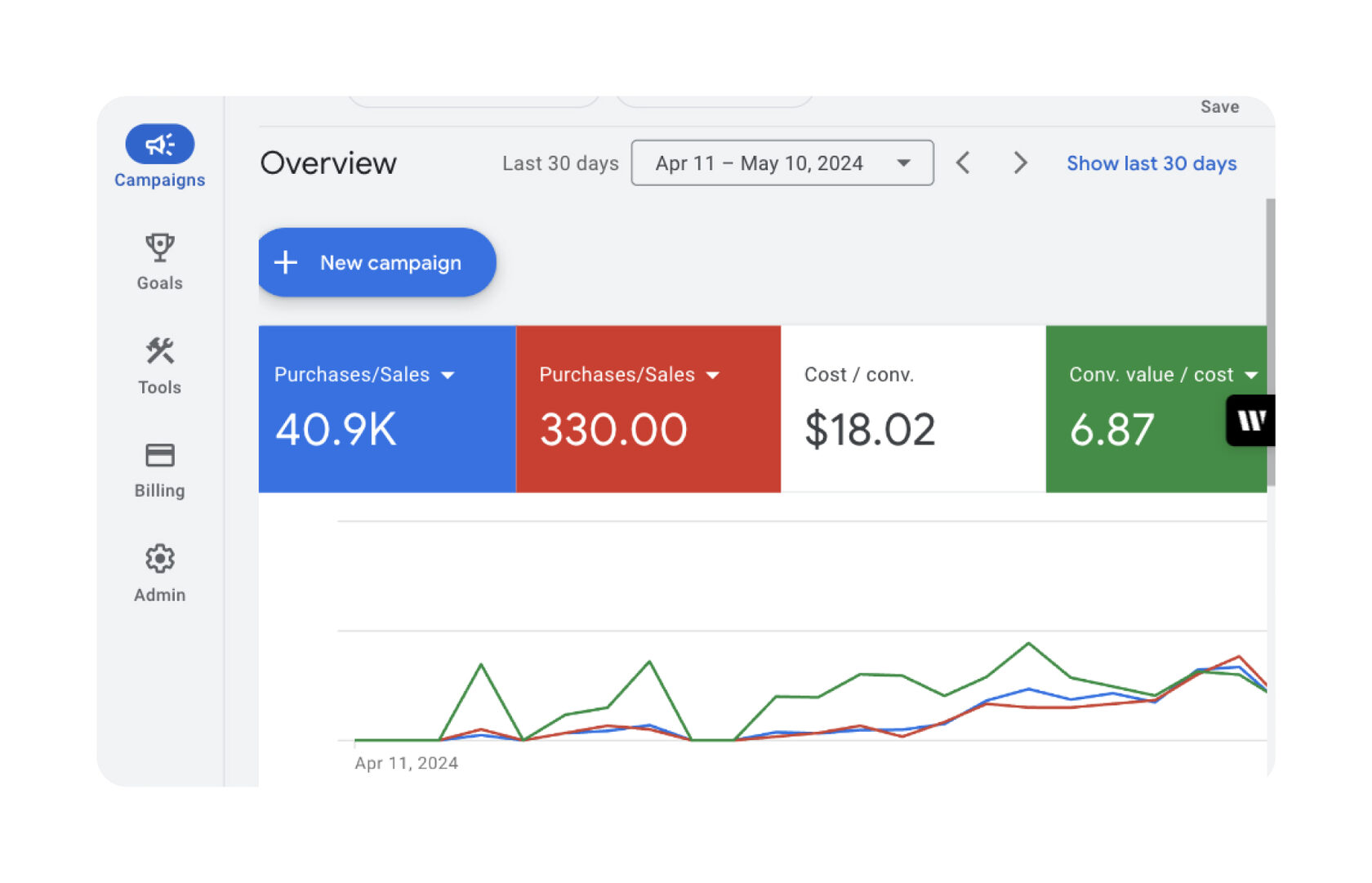
It worked crazy fast. By month four, we'd chopped what they paid for new customers from $40 down to $19 and change.
Google was even worse! They were throwing money at broad keywords and paying $100+ per customer. Insane! We killed all that, focused on specific neighborhoods ("Lincoln Park flower delivery") and occasions ("anniversary flowers same day"). Their cost dropped to $28 per customer. Google went from budget-killer to profit-maker practically overnight.
We created a four-part system: First, eye-catching flower videos for people who'd never seen their shop before. Then special offers for folks who stopped to look at those videos. Past customers got emails and ads showing off seasonal stuff like "Fall Harvest" collections. And anyone who loaded a cart but didn't buy? We chased them with ads showing exactly what they almost bought.
It worked crazy fast. By month four, we'd chopped what they paid for new customers from $40 down to $19 and change.
Google was even worse! They were throwing money at broad keywords and paying $100+ per customer. Insane! We killed all that, focused on specific neighborhoods ("Lincoln Park flower delivery") and occasions ("anniversary flowers same day"). Their cost dropped to $28 per customer. Google went from budget-killer to profit-maker practically overnight.
- Brand Awareness:
The product lineup was a mess too—87 different arrangements, most barely selling. We ran the numbers and grouped everything into A-sellers (top 20%), B-sellers (middle 30%), and C-sellers (bottom 50%). We cut most C-products completely and pushed their B-segment bouquets hard—those $65-85 arrangements with great margins but needed more visibility. Website conversion doubled from a sad 1.8% to a healthy 3.2%.
Their website was the final disaster—clunky, slow, and built on some ancient platform nobody could update. We moved everything to Shopify, added real-time delivery tracking, and built a custom checkout flow specifically for flower orders (with clear delivery date selection and card message options). The new site converted better and cost less to maintain—a rare win-win.
The Results: A Thriving Flower Shop Chain
The results of our collaboration were outstanding:

- +200% Average Monthly Revenue: The shop’s revenue doubled within eight months.
- +255% Store Traffic: A combination of SEO, paid ads, and content strategy drove significant traffic growth.
- +260% ROAS: Optimized ad campaigns delivered a strong return on ad spend.
- -61% Customer Acquisition Costs: Streamlined advertising and Shopify integration reduced costs dramatically.
Ongoing Collaboration and Future Plans
We're still working with them today. What started as a marketing rescue mission has evolved into a true partnership. They're not just surviving anymore—they're planning their future.
Right now, we're helping them break into the wedding and corporate event space. The margins there are insane compared to single bouquet orders. One medium-sized wedding brings in what used to take them 40 individual orders to earn.
They've also started hosting flower arranging workshops on slow weekday evenings. These classes fill seats that would otherwise sit empty, create additional revenue, and—best of all—turn customers into walking advertisements when they proudly display their creations at home.
The business fundamentals are rock solid now. They're acquiring new customers for under $30 each, and their lifetime value calculations show these customers stick around for an average of 3.2 purchases. With numbers like that, they can confidently reinvest in growth instead of constantly worrying about making payroll.
What a difference from the struggling shop chain we met eight months ago!
Right now, we're helping them break into the wedding and corporate event space. The margins there are insane compared to single bouquet orders. One medium-sized wedding brings in what used to take them 40 individual orders to earn.
They've also started hosting flower arranging workshops on slow weekday evenings. These classes fill seats that would otherwise sit empty, create additional revenue, and—best of all—turn customers into walking advertisements when they proudly display their creations at home.
The business fundamentals are rock solid now. They're acquiring new customers for under $30 each, and their lifetime value calculations show these customers stick around for an average of 3.2 purchases. With numbers like that, they can confidently reinvest in growth instead of constantly worrying about making payroll.
What a difference from the struggling shop chain we met eight months ago!
Key Takeaways for Flower Shop Chains
This case demonstrates the power of a tailored marketing strategy for flower shop chains. From optimizing ad campaigns to redesigning websites and refining product lines, every detail contributes to success. For florists looking to scale, focusing on branding, customer acquisition, and operational efficiency is essential.
At Bloom Rush, we specialize in helping flower shops grow through innovative marketing and operational strategies. Let’s work together to make your business bloom!